


Anhui Feistel Outdoor Product Co., Ltd.:Your Trustworthy Sleeping Pad Manufacturer!
Anhui Feistel Outdoor Product Co., Ltd. is an industry and trade company, located in Hefei city, Anhui Province, mainly engaged in outdoor products, such as camping hammocks, beach blanket , carabiner, camping wagon, camping storage box, camping tables, camping chairs, trekking poles,sleeping pad and other outdoor products.
Rich Product Range
Our company specializes in producing outdoor products. Including camping supplies, climbing supplies and travel supplies. Camping products mainly include camping tables, camping chairs, camping beds, camping mats. Climbing products mainly include climbing carabiners and trekking poles. Travel products mainly include picnic blankets, beach blankets, hammocks and so on.
Leading Service
Provide relevant information about our company's products, such as inquiry, inspection reports, samples, qualification certificates, etc., according to customer requirements. In the sale, professional purchasing and documentary personnel are responsible for following up the production, transportation and delivery of products. After-sale, we provide relevant technical services according to customer requirements, solve problems in the use process, and provide solutions for out-of-stock and wrong-delivery.
Quality Guaranteed
Provide relevant information of our company's products according to customer requirements, such as inquiry, test report, sample, certificate of conformity, etc. During the sale, there are professional purchasing and order follow-up personnel responsible for following up the production, transportation, delivery, etc. of the products. After the sale, provide relevant technical services according to customer requirements to solve problems that arise during use.
Wide Sales Countries
Our products are exported to more than 40 countries around the world, including the United States, Canada, Italy, France, the Netherlands, etc., and our products can be customized.


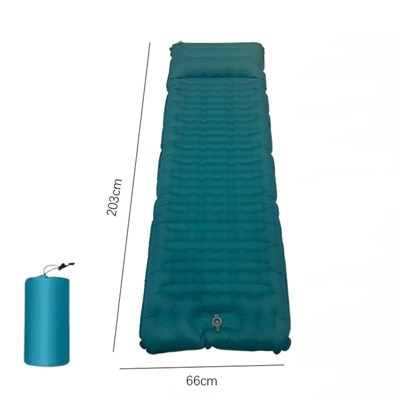
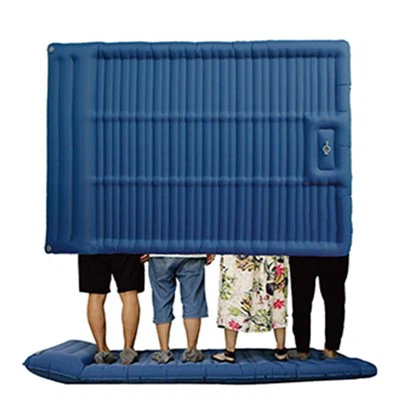


What is Sleeping Pad
In camping, sleeping pad is lightweight pad, common among hikers, backpackers and budget travelers, often used in conjunction with a sleeping bag. Its purpose is to provide padding and thermal insulation.In its simplest form a sleeping pad consists of a foam-like material that is about half a centimeter thick (about a quarter of an inch). The dimensions of the pad are usually about the same length as a sleeping bag and a little wider. Slight variations in design can be found, such as rippling in the foam, but these do not significantly affect the pad's thermal properties.The primary purpose of the pad is to prevent the loss of body heat into the ground while sleeping. The materials used are typically filled with air pockets, slowing down the conduction of heat through the pad, as air is one of the best (and cheapest) insulators.
Types of Sleeping Pad
Self-Inflating Pads
These pads are filled with foam that expands when you open a valve, allowing them to inflate automatically. They are easy to use and provide good insulation, but can be heavy and take up more space than other types of pads.
Air Pads
Air pads are lightweight and compact, making them ideal for backpacking. They require manual inflation, but many models come with a built-in pump or a hand pump. Air pads provide excellent insulation and can be quite comfortable, but they can be punctured or damaged by sharp objects.
Closed-Cell Foam Pads
These pads are lightweight and durable, making them a good choice for camping trips where space and weight are not major concerns. They do not require inflation and are resistant to punctures, but they may not be as comfortable as other types of pads.
Memory Foam Pads
Memory foam pads contour to your body shape, providing excellent support and comfort. They are typically heavier and less compact than other types of pads, making them better suited for car camping or basecamp use.
Inflatable Raft Pads
These pads are designed for use in rafts or on boats, providing a stable and comfortable surface for sleeping. They are usually made from durable materials and can support a significant amount of weight.
Benefits of Sleeping Pad

Suitable for Each Activity
The first reason you should consider adding a pad to your camping quiver is to mirror the needs of your activities. An ultralight backpacking pad isn’t the ideal setup for a weekend of climbing and car camping. A luxurious and thick foam pad also isn’t what you want to bring for a long-distance backpacking trip.
Versatility
The final advantage of multiple pads is the versatility of your sleep system. From sleep surfaces to temperatures, to packing, different pads can fulfill different needs. Sometimes, they can even combine to fulfill a whole new set of needs.
The closed-cell foam makes it easy to use around camp and creates a great protective layer under your self-inflating or air pad. It easily packs outside of your pack, bike or boat. Perhaps the biggest benefit is the boost in warmth by increasing the R-value of the entire system. Use it alone or as part of a system, it’s a lightweight and inexpensive addition to your gear closet.

One of the first steps in using a self-inflating sleeping pad, of course, getting it out of its stuff sack and unrolling it. Do this on a flat surface and think of safety, don’t unroll it in places that might have potential hazards for your sleeping pad. Keep it as far away as possible from sharp rocks, twigs, and pine needles.Once you have it ready for inflation, your sleeping pad should rest straight and level on the surface, ready to self-inflate.
After unrolling your pad, open the valve on the upper left or right side of your pad. Self inflating sleeping pads have rolling valves, which you need to roll to the right side to open. Make sure you don’t roll into the wrong side, or you will close the valve and can even break it if using force.Leave the pad to self inflate. This can take from 5 minutes to half an hour.
Once your pad has self-inflated, if it’s your first time using it: over-inflate it. This is very important because you want to set the air volume in the pad as high as possible.
Even if it’s not your first time using your pad, add some air manually into it for maximum comfort. Just add as much air as you want to, and do this by inflating the pad on the valve with your mouth.
How to Maintain Sleeping Pad
How to clean Sleeping Pad?
Not all sleeping pads were made equally, so choosing one that can be cleaned easily should be a top feature to look for. It’s imperative to choose an inflatable sleeping pad because these can be deflated just as easily which makes for easier cleaning. While you should never place your pad directly in the washing machine, you can give it a thorough hand wash with detergent provided the valve is closed and the manufacturer’s instructions say it’s okay to do so.
For less intense cleaning, a simple spot clean with a warm rag and some dish soap is all it needs. These durable devices are made from polyester so they’re able to withstand quite a bit, but the foam within them that creates their plushness won’t always react well to a deep clean.
How to Keep Sleeping Pad Dry?
One of the biggest mistakes that first-time campers make is not knowing how to care for their gear, which can end up costing quite a bit of money in replacements. Your sleeping pad needs to be taken care of just as you would any other piece of equipment, and the most important thing you can do for this is keeping it dry.
Firstly, if you think you’ll be venturing out in wet conditions, you’ll want to keep it protected from the rain or water. A good sleeping pad will come with its own carry case and this can be further protected with a waterproof covering that keeps the moisture away.
Secondly, when the time comes to set up your sleeping pad, you should consider placing a tarp or other weatherproof blanket in between it and the ground. This will prevent moisture from reaching your sleeping pad and also keep it safe from dirt and grime that is usually lurking on the campsite floor.
How to Store Sleeping Pad?
We recommend storing the sleeping pad in a dry place with it unrolled and the valve open. Ideal locations for your pads to be stored leaning against the wall, closet, or behind the bed.Make sure you position the valve facing up, so that the moisture inside the air pad can escape and evaporate.
If this is taking too much space, you can store it in a rolled position. Once you want to use it again, make sure to do a restoration process before, do this by unrolling the pad and leaving it with an open valve.
How to Choose Sleeping Pad
There are two size considerations when you pick a pad: width and length. Part of this will be determined by your size and partly by how you sleep. If you have wide shoulders and sleep on your back, you may want a wider pad. If you’re small and sleep on your side, a narrow pad may be all you need. The length is based on your height, but also your preferences. If you’re looking to reduce weight or bulk, consider a shorter pad. Many backpackers place their backpacks under their lower legs; the pad will provide support from about the knees up.
The bare earth sucks warmth from us. A sleeping pad protects us from that. R-value is the rating of a sleeping pad’s ability to keep you warm. Pads generally fall between ratings of 1 to 7. A lower R-value means that a pad provides less insulation against the cold, while a higher rating provides more.
Lungs: Most pads these days come with a multivalve that has an “in” option and an “out” option. This makes blowing up the pad using your breath much easier because you don’t have to worry about the air escaping when you take a breath. How many breaths it takes to fully inflate a pad depends on several factors: the individual pad design, how tired you are at the end of the day and the elevation where you are.
Inflation sack: Available with some pads. This option allows you to wave a bag around, gathering air and then directing that air into your pad. One bonus of this method is that the sack can double as a pillow with a few clothing items stuffed inside.
Integrated pump: Some pads come with a hand pump built in. This adds weight, so you’ll need to decide if it’s worth it.
Self-inflation: This feature allows you to open the valve when you get to camp and let the pad suck in the air it needs. Along with ease of inflation, these pads offer the comfort of open-cell foam plus good insulation but they tend to be heavier and less compact than a basic inflatable pad.
While foam pads are generally very quiet, the lightest inflatable pads can be noisy, due to the layer of Mylar-like heat-reflecting insulation inside. If you do a lot of rolling over during the night, that sound may annoy your backpacking buddies. Some midweight pads are actually very quiet and if you share a tent or tend to sleep very close to other tents, it may be worth checking out the options in person before investing.
Frequently Asked Questions
We're professional sleeping pad manufacturers and suppliers in China, specialized in providing high quality customized products. We warmly welcome you to wholesale cheap sleeping pad for sale here from our factory. Good service and low price are available.
d shape carabiner hook, cloth folding table, beach sun shade tent